Houston doesn’t do “gentle” weather. We get soaking rains, baked-dry summers, shifting clay soils, and the kind of temperature swings that quietly bully concrete until it starts dipping at the corners. So when a repair method shows up that’s fast, precise, and doesn’t turn your driveway into a weeklong construction zone… people notice.
Polyurethane concrete leveling has been around long enough to prove itself, but lately it’s been winning jobs that used to default to mudjacking. Not because mudjacking is “bad.” Because foam is usually cleaner, lighter, and easier to control, especially on the finicky slabs you see all over Houston subdivisions.
One line version: it lifts concrete without the mess and without the waiting.
Hot take: Mudjacking feels like yesterday’s fix in a city that settles like Houston
I’m not saying mudjacking can’t work. It can. I’ve seen it hold up fine in the right conditions.
But if you’re dealing with tight tolerances, trip hazards at the sidewalk, a garage lip that needs to meet the slab cleanly, a pool deck where you really don’t want over-lift, polyurethane concrete leveling in Houston, TX is simply easier to steer. You’re not pushing a heavy slurry and hoping it behaves; you’re injecting a material that expands predictably when the crew knows what they’re doing.
And crews like it because the job moves. Homeowners like it because their driveway often isn’t out of commission for days.
How polyurethane leveling actually works (plain-English version, then the nerdy one)
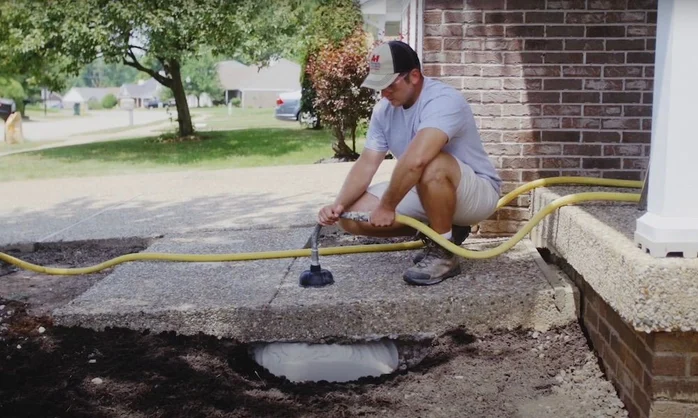
Picture a sunken slab like a table leg that’s lost support. The concrete isn’t “broken,” it’s just unsupported in spots. Polyurethane leveling rebuilds that support from underneath.
What you’ll see on-site:
– Small holes drilled through the slab (usually much smaller than mudjacking ports)
– A hose and injection gun
– The slab rising, slowly, if the tech is careful, back into plane
Now, the more technical angle.
The foam is a two-part polymer that reacts and expands after injection. That expansion does two jobs at once: it fills voids and it creates lift. Skilled techs control lift by adjusting injection location, pressure, and material volume. The goal isn’t just “raise it”; it’s raise it evenly so the load transfers predictably across the base.
Cure time is the part that makes people do a double-take. Many polyurethane systems reach usable strength fast enough that surfaces can reopen the same day, sometimes within hours, depending on site conditions and formulation.
(If you’ve ever had to tell a tenant or customer “you can’t park here until Thursday,” you get why this matters.)
The Houston factor: soil, water, and why voids keep coming back
Here’s the thing about Houston-area settlement: it’s rarely a single-event failure. It’s gradual. Water moves, clay swells, clay shrinks, and the subgrade gets weirdly inconsistent from one season to the next.
Poly foam helps in a few ways that fit our local reality:
– It’s lightweight, so you’re not adding a heavy new load to already-sensitive soils.
– It can reduce water pathways by filling voids that act like little channels under the slab.
– It’s precise, which matters when you’re trying to correct a slope without creating a new drainage problem.
Now, this won’t apply to everyone, but if your slab is settling because of an ongoing drainage issue, downspouts dumping at the edge, negative grade, broken irrigation, you can lift it perfectly and still watch it move again later. Foam isn’t magic. Fix the water.
Polyurethane leveling vs. mudjacking: the comparison people actually care about
You can get lost in marketing talk pretty fast, so I like to keep it grounded in jobsite realities.
Where polyurethane tends to win
– Speed: cure and return-to-use can be dramatically faster
– Precision: better control of lift and grade correction
– Less invasive drilling: smaller ports, typically cleaner finish work
– Weight: less added mass under the slab
Where mudjacking still has a place
Mudjacking can be cost-competitive on some projects, and some contractors have decades of experience with it. On larger slabs where ultra-fine precision isn’t the priority, it may pencil out.
But the tradeoff is real: slurry can shrink, wash out, or settle depending on mix and soil conditions, and the process can be harder to fine-tune when you’re trying to hit a clean final elevation.
If you’re choosing for a front walkway trip hazard that needs a clean, safe edge… I lean polyurethane most of the time.
A stat (because feelings aren’t measurements)
The broader concrete repair world has been moving toward polyurethane and resin-based injection because of performance and logistics, not just hype. For a high-level reference point: Grand View Research projects the global polyurethane foam market continuing steady growth through the decade, driven partly by construction uses and performance materials demand. Source: Grand View Research, Polyurethane Foam Market report (latest available edition on their site).
Is that Houston-specific? No.
Does it match what contractors are bidding and installing locally? In my experience, yes.
Fast lifts that stay lifted: what actually matters on install day
Some contractors talk about foam like it’s a single product. It isn’t. Outcomes swing based on choices that never show up in a flyer.
A solid polyurethane leveling job usually hinges on:
Injection strategy.
Hole placement isn’t random. A good tech is thinking about load paths, void geometry, and where lift needs to start versus where it needs to “catch up.”
Moisture and temperature.
Poly chemistry reacts differently when the slab is hot enough to fry an egg (hello, August) versus cool and damp after a rain. Good crews adjust.
Controlled lift cycles.
One big blast of foam is how you crack concrete or overshoot. Staged injection is slower, but it’s safer and cleaner.
Documentation and QA.
I’m biased here, but I trust crews that measure before/after elevations and show you what changed. If a company can’t explain their process beyond “we lift it,” that’s a yellow flag.
“Okay, but what about safety and disruption?”
On most residential jobs, disruption is minimal. You’re not tearing out the slab. You’re not hauling tons of wet slurry through a gate. You’re drilling, injecting, patching, cleaning up.
That said, polyurethane is still a chemical reaction. Crews should ventilate enclosed areas, control overspray, and handle materials responsibly. If someone shrugs off safety talk, that’s not “tough”, that’s sloppy.
One-line reality check: fast doesn’t mean careless.
Hiring a polyurethane contractor in Houston: what I’d ask if it were my driveway
Some of this is boring, but boring questions save you money.
Pricing transparency (the stuff that bites later)
Ask for an itemized quote. If you get one lump number with no scope detail, you’re basically signing up for surprises.
Questions that tend to reveal the truth:
– What counts as an “extra” (more foam, more holes, mobilization, trip fees)?
– Is the price tied to square footage, number of injection points, or time?
– What happens if the slab needs stabilization beyond the original plan?
Material quality: don’t accept “it’s industrial grade” as an answer
Ask what foam system they use and whether they can provide product data sheets. Compressive strength, density, and water resistance should be measurable characteristics, not vibes.
Also: warranty language matters. If the warranty is vague enough to drive a truck through, it’ll be enforced that way.
Credentials and track record (the unglamorous filter)
Licensing and insurance are table stakes. I also like to hear:
– How many leveling jobs they do per month (not per year)
– Whether the crew is in-house or subcontracted
– If they’ll share references from projects similar to yours
And yes, check reviews, but read the details. “They were nice” isn’t the same as “the slab is still level after two hurricane seasons.”
Real-world impacts: driveways, sidewalks, walkways (where the benefits show up fast)
Trip hazards are the obvious one. The less obvious win is how leveling affects daily use patterns.
A leveled driveway reduces scraping, improves drainage flow, and can keep small separations from turning into bigger breaks. Sidewalk corrections matter for liability too, HOAs and commercial owners in Houston are paying more attention to that now, and they should.
I’ve also seen polyurethane leveling used to “save” slabs that people assumed had to be replaced, especially when the concrete itself was still structurally decent and the problem was underneath.
Where this market is headed in Houston (my read)
More polyurethane. More hybrid approaches. More measurement.
Contractors are already getting sharper with laser levels, mapping, and repeatable QC because customers are asking better questions and because job sites are tighter on time. Regulations and customer preferences are also pushing lower-odor, lower-emission formulations, especially for enclosed or sensitive environments.
The deciding factor won’t be hype. It’ll be whether the industry keeps delivering what the method promises: tight lift control, minimal disruption, and slabs that don’t sink again a year later because someone ignored drainage.
If you want, tell me what kind of slab you’re dealing with (driveway, sidewalk, pool deck, garage approach) and what symptoms you’re seeing (cracks, pooling water, separation, trip edge). I’ll point out what typically causes that in Houston and what questions to ask before you pay anyone.











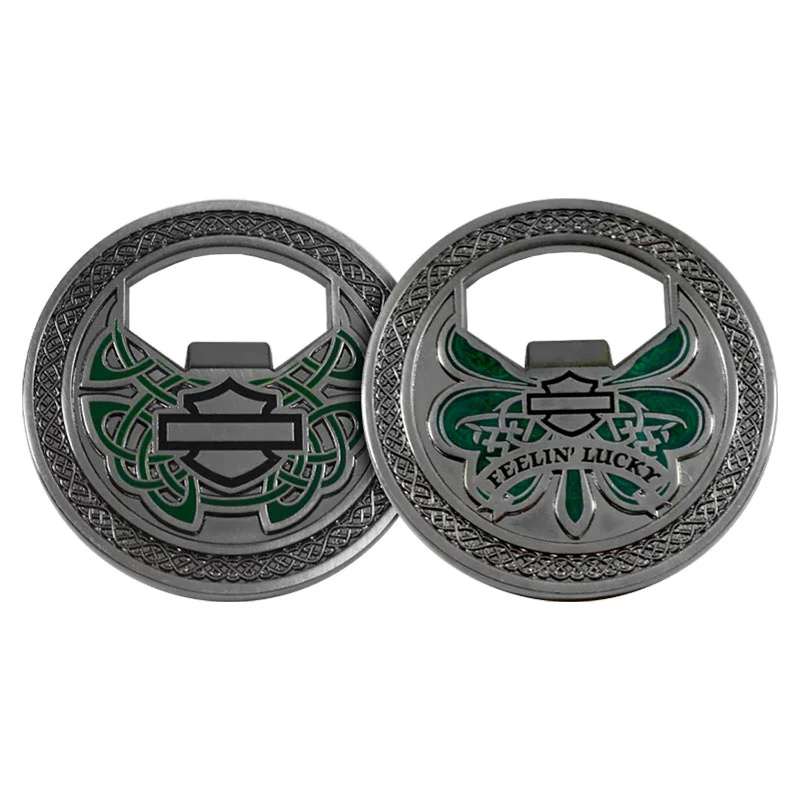 Convenience is a major reason why custom metal bottle opener coins continue to gain attention. Their lightweight design allows them to fit comfortably in pockets, bags, keychains, or collections. Whenever needed, they provide a quick and reliable way to open bottles without requiring additional tools.
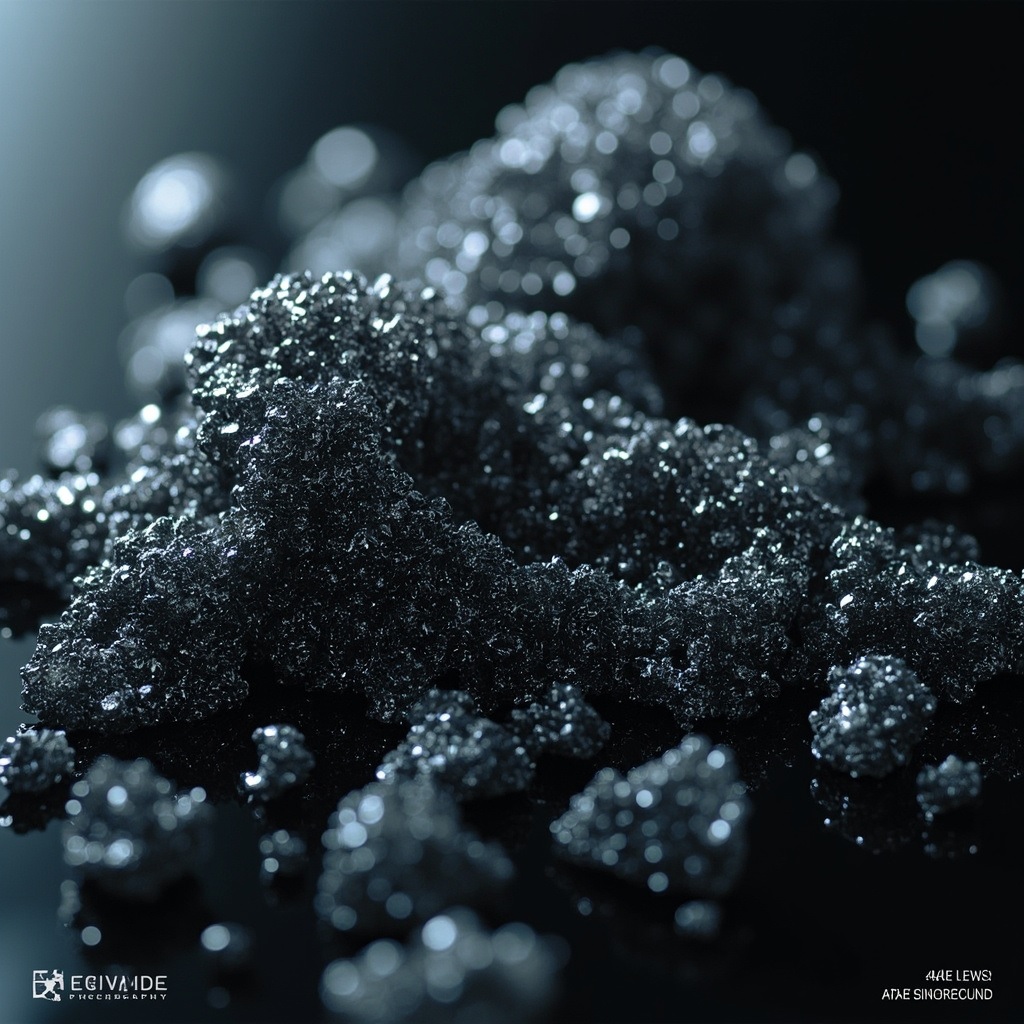 Stop pretending all graphite is the same. If you are buying grease based on price alone, you are likely smearing your expensive machinery with glorified pencil dust. The difference between a grease that protects under extreme pressure and one that fails under a light load comes down to one invisible factor: the crystallinity of the